Non-compete clauses which create barriers for start-up firms looking to hire will be prevented under new legislation, Andy Burnham has revealed, in a bid to boost UK innovation.
The Prime Minister said some companies have gone "too far" in their use of restrictive practices, such as non-compete clauses, with workers caught in a "trap".
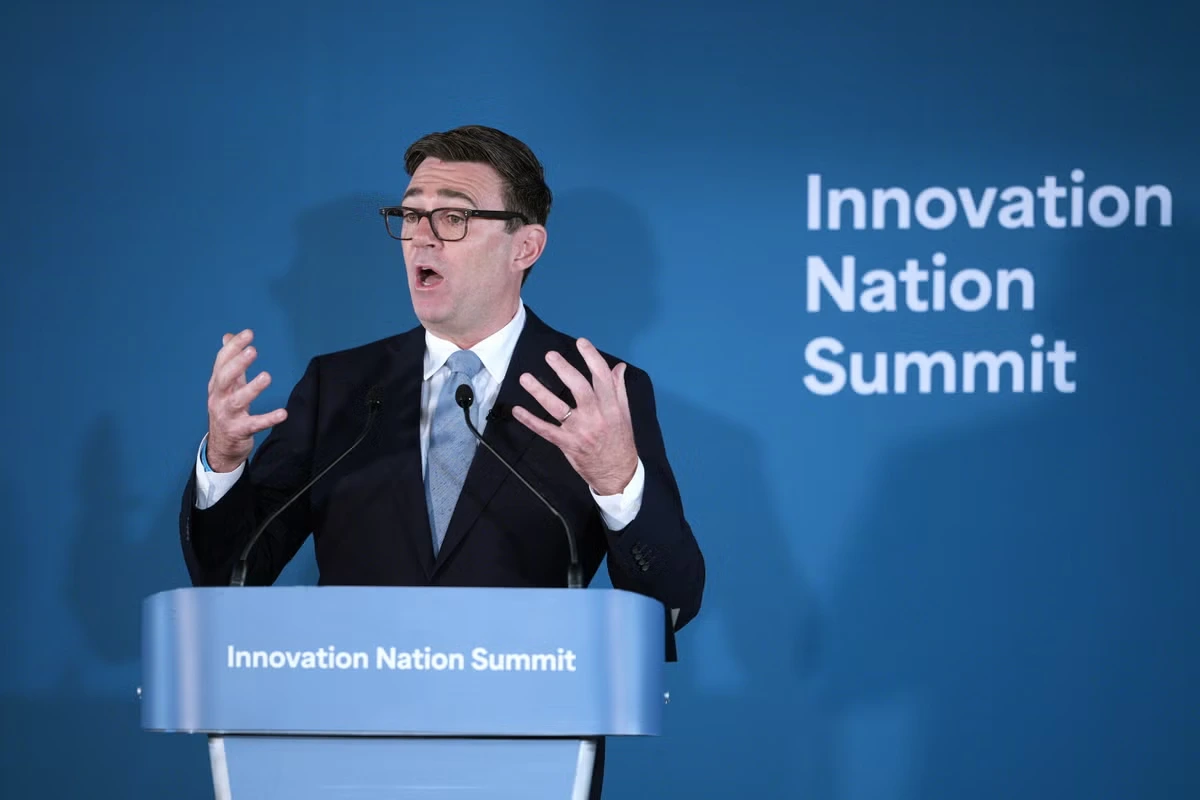
Speaking from the Innovation Nation Summit in Manchester on Friday, he described it as the “Bosman ruling for the innovation sector”.
Mr Burnham said: "I believe some businesses have gone too far in their use of restrictive practices such as non-compete clauses, a view I know shared by many in this room and across the sector.
"Non-compete clauses stop workers from joining a rival organisation, or indeed, setting up one of their own after they have left their role, and I think that's a drag on innovation and prevents the best really being energised and bringing that dynamism to the economy.
"So we are looking at changing this. They are often held back and unpaid during the time they have to sit out on the sidelines, and it does, as I say, stunt innovation and traps workers.
"So I can confirm today we will legislate to make sure that non-compete clauses will no longer be a barrier to hiring for our most promising start-ups and scaling firms.
"Call it, if you like, the Bosman ruling for the innovation sector, but I think it's needed and long overdue.
“And we will ensure, by the way, that workers in the foundational economy, the everyday economy, are not prevented from moving jobs too.”
The Bosman ruling was a European Court of Justice case which paved the way for out-of-contract footballers to move freely between clubs.
Mr Burnham had earlier set out plans to make the UK a world-leading “innovation nation”.
He announced three measures, including devolving funding for innovation, identifying the clusters around the UK with the potential to become truly world-leading, and pressing for more collaboration between clusters.
Mr Burnham said these measures could lead to the UK beginning to “punch above its weight”.
Mr Burnham set an ambition for the UK to make a major scientific breakthrough within the next decade – highlighting tackling cancer, dementia and nuclear fusion as potential areas.
The Prime Minister set out a new “national drive” to reindustrialise the UK driven by high-tech firms and researchers around the country.
He said the UK had led the world before with major breakthroughs in science and technology and could do so again.
He said: "We can do it, and we can be the nation in the next 10 years that… does find the cure for cancer, that does make the breakthrough on dementia, or indeed on nuclear fusion.
“To anyone who says we can’t do that, I say: we did it before, so why not?”
With the Budget due on 28 October, Mr Burnham hinted at tax breaks for firms looking to grow in the UK.
He said: "If the UK wants to build global companies, we need to be globally competitive. To do that, we cannot have Britain's start-ups simply sell up.
"So one of our biggest challenges is breaking through our own ceiling. Too often, our best ideas are developed and scaled overseas… and with it the jobs, technology, investment that goes with them.
“So I know there is more to do to fix that, specifically on tax, to encourage people to stay and scale.”