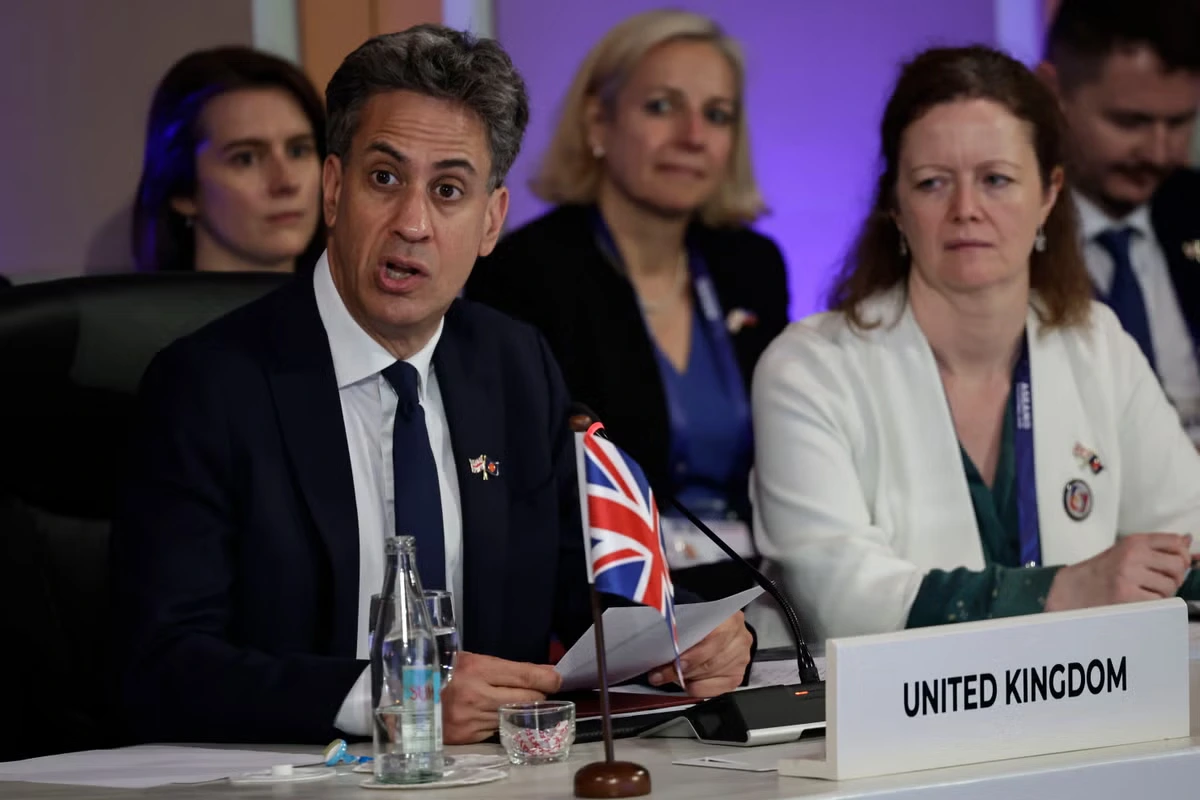
Ed Miliband is taking up the UK's seat on the board of the World Bank – saying that international development and the climate crisis are "central" to government policy.
In becoming UK governor for the Bank, a position usually taken by a junior minister, the foreign secretary has said he is taking "personal leadership" of overseas aid and global finance to help countries adapt to the climate crisis. Mr Miliband was previously energy and net zero secretary in Sir Keir Starmer's government.
"International development is not an add-on to British foreign policy — it is central to it," Mr Miliband said. "By taking on the role of UK governor to the World Bank, I want to send an unambiguous signal that this Government is serious about its global leadership on development and climate."
It comes as the UK implements substantial aid cuts, with spending falling from 0.5 per cent to 0.3 per cent of Gross National Income (GNI) through to 2029.
Nine African countries are set to see their UK bilateral aid cut by more than 80 per cent, with total bilateral aid to African countries set to fall from £1.6 billion to under £700m. The countries impacted includes numerous long-standing UK partners - including Ghana, Kenya, Malawi, Tanzania, and Mozambique - whose aid relationship is set to be virtually eliminated, or reduced to £5m or less.
Kenya is set to see UK foreign aid fall by 93 per cent, Tanzania by 91 per cent, Mozambique by 90 per cent, Malawi by 90 per cent, and Zambia by 88 per cent.Countries experiencing some of the most pressing humanitarian emergencies in the world are set to see funding slashed, with aid to the Democratic Republic of Congo - currently in the midst of an Ebola outbreak - falling by 29 per cent, and aid to Lebanon also falling by 58 per cent.
Overall UK aid cuts between 2024/5 to 2028/9 add up to some £6.5bn, with aid to fragile and conflict affected states – supposedly another government’s priority – falling by 34 per cent, aid to least developed countries falling by 49 per cent, and aid to Africa falling by 56 per cent.
UK climate aid is also set to fall, from £11.6bn across the five years to 2026 to £6bn over the next three years. This has led to the UK cutting its contribution to the Green Climate Fund – the world’s biggest source of finance for developing countries to adapt to the climate crisis – by 50 per cent. Green groups and MPs have also criticised the new prime minister, Andy Burnham over a decision to fund the government’s new £500m policy capping bus fares in England at £2 using the climate aid budget.
Mr Miliband replaced Yvette Cooper as foreign secretary, with The Independent having revealed that the role change could come with permission to prioritise climate goals and with a roadmap to return the UK to spending 0.7 per cent of GNI.
In a statement, the Foreign, Commonwealth and Development Office (FCDO) said: "UK leadership at the World Bank will help drive international action on poverty, climate change and economic stability, and tackle global issues, like food insecurity and energy price shocks, helping make food and energy more affordable for people in the UK."
Mr Miliband will be supported by the new minister for development, Kirsty McNeill.
“Kirsty McNeill brings outstanding experience and deep personal commitment to this agenda, and together we will ensure the UK punches its full weight in tackling the defining challenges of our time," Mr Miliband said of the appointment.
The president of the World Bank, which provides around $100 billion in finance to developing countries per year, Ajay Banga said:
“The United Kingdom is a valued partner of the World Bank Group and a longstanding champion of development. I look forward to working closely with the foreign secretary to help countries create jobs, mobilise more private capital, and deliver opportunity for people. Together, we can help turn ambition into results where they matter most.”
This story has been produced as part of The Independent’s Rethinking Global Aid project